
 By
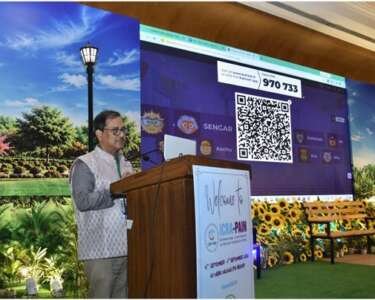
By New Delhi, August 14, 2026. A landmark study led by Dr. Mustafa Barbhuiya, Founder and Director, Foundation for Advancement of Essential Diagnostics, highlights the critical role of diagnostic equity in global public health and healthcare delivery.
A new peer-reviewed study led by Mustafa A. Barbhuiya, PhD, Medical Director of Clinical Chemistry and Point-of-Care Testing at Baystate Medical Center and Assistant Professor of Pathology at UMass Chan Medical School–Baystate, examines a fundamental but often overlooked challenge in the global fight against tuberculosis (TB): whether patients have access to the essential diagnostic services needed to identify disease and drug resistance. He founded the Foundation for Advancement of Essential Diagnostics, a non-profit research and development organization in India to promote access to diagnostics and equity in healthcare delivery.
The study, “Evaluating the nationwide availability of essential diagnostics for tuberculosis towards achieving a TB-free India,” has been published in Microbiology Spectrum, a journal of the American Society for Microbiology.
The research represents a significant academic contribution at the intersection of laboratory medicine, health systems, diagnostic equity, and global public health.
Rather than focusing solely on the performance of an individual diagnostic test, the study examines diagnostic access as a component of healthcare delivery—asking whether essential TB diagnostic services are available at appropriate levels of the healthcare system.
“Diagnosis is the gateway to effective treatment and disease control. In global health, we often focus on whether a technology exists. The more important healthcare-delivery question is whether that technology is accessible to the patient who needs it, at the right place and at the right time,” said Dr. Barbhuiya.
From laboratory medicine to global health systems
The study grew from Dr. Barbhuiya’s longstanding interest in the role of essential diagnostics in healthcare delivery and population health.
At Baystate Medical Center, Springfield, Massachusetts, USA, Dr. Barbhuiya serves as Medical Director of Clinical Chemistry and Point-of-Care Testing and holds academic appointments in Pathology and Healthcare Delivery and Population Sciences at UMass Chan Medical School–Baystate. His academic work extends beyond the traditional boundaries of laboratory medicine to examine how diagnostic systems influence population health, particularly in resource-constrained settings.
The current study represents an example of that approach: applying principles of laboratory medicine and healthcare delivery to a major global health challenge. The research combined a nationwide analysis of India’s TB Treatment Units and Culture and Drug Susceptibility Testing (CDST) laboratories with a field assessment of 327 public healthcare facilities across seven states and Delhi.
The study identified a 61.56% gap in CDST laboratory capacity based on the population-coverage requirements used in the analysis.
At the primary-care level, only 4.94% of surveyed Primary Health Centers had the complete set of essential TB diagnostics recommended for that level of care.
The researchers also documented variable availability of acid-fast bacilli microscopy, chest X-ray, molecular testing, and fluorescence microscopy across the surveyed facilities.
Diagnostic equity as a healthcare-delivery issue
The findings underscore an increasingly important principle in global health: the availability of healthcare technology does not necessarily translate into equitable healthcare delivery.
A diagnostic test has limited population-health impact if patients cannot access it because of geographic, infrastructural, or health-system barriers. The study therefore moves the discussion of TB diagnosis beyond individual technologies and toward the broader architecture of healthcare delivery—including peripheral facilities, referral networks, laboratory capacity, and access to drug-resistance testing.
“This is fundamentally a laboratory-equity issue, but it is also a healthcare-delivery issue. The laboratory is not isolated from the health system. Where diagnostic capacity is located, how patients reach it, whether testing can be performed reliably, and whether results can guide treatment all influence clinical outcomes and public health,” Dr. Barbhuiya added.
A global health question with relevance beyond tuberculosis
Although the research focuses on tuberculosis in India, the investigators believe the underlying question is applicable to many diseases and health systems. The World Health Organization’s Essential Diagnostics List provides a framework for countries to identify diagnostic tests that should be available at different levels of their healthcare systems. The study examines how such a framework translates into actual diagnostic infrastructure on the ground. This has broader relevance for diseases ranging from infectious diseases to diabetes, cardiovascular disease, and cancer, where early and accurate diagnosis is essential for appropriate treatment and disease management.
Dr. Barbhuiya founded the Foundation for Advancement of Essential Diagnostics (FAED) to advance the role of essential diagnostics in global health and healthcare delivery. His work has included research and policy engagement related to diagnostic access, laboratory systems, and essential diagnostics in India and other resource-constrained settings.
A multidisciplinary and international collaboration
The study brought together investigators from the Foundation for Advancement of Essential Diagnostics and collaborating institutions in India and the United States. The collaboration illustrates the increasingly international nature of academic medicine and health-services research, linking laboratory medicine expertise in the United States with field-based health systems research in India. The study also reflects the role that academic medical centers can play in addressing global health challenges through research that connects clinical expertise with population-level questions.
Rigorous peer review strengthened the study
The manuscript underwent multiple rounds of peer review before publication. Reviewers examined the study’s sampling methodology, geographic representation, definition of diagnostic availability, private-sector coverage, human resources, diagnostic utilization, statistical methodology, and implications for laboratory equity. The authors subsequently revised the manuscript to clarify the study’s scope and limitations, including distinguishing the multi-state facility assessment from the nationwide mapping of TB Treatment Units and CDST laboratories.
The final manuscript was accepted for publication on June 27, 2026, and subsequently published in Microbiology Spectrum, an American Society of Microbiology journal.
Building bridges between clinical medicine and global health
The work illustrates how academic medicine can extend beyond the hospital and laboratory to address questions of population health and health-system performance. Dr. Barbhuiya’s research agenda sits at the intersection of clinical laboratory medicine, diagnostics, healthcare delivery, and global health policy.
“Our responsibility as academic physicians and scientists extends beyond diagnosing the individual patient in front of us. We also need to understand whether health systems are structured to make accurate diagnosis possible for entire populations, particularly populations that are underserved,” said Dr. Barbhuiya.
The researchers are continuing work to characterize diagnostic infrastructure and access in India and to examine the broader role of essential diagnostics in strengthening healthcare delivery.
Publication
Barbhuiya MA, Chakraborty B, Laskar A, et al. Evaluating the nationwide availability of essential diagnostics for tuberculosis towards achieving a TB-free India. Microbiology Spectrum. 2026. DOI: 10.1128/spectrum.00703-26.
Full article: Microbiology Spectrum – published article